HomeReviewsFlashback 2
Flashback 2 review: a broken travesty of a retro revivalCyber punked
Cyber punked
Image credit:Rock Paper Shotgun/Microids
Image credit:Rock Paper Shotgun/Microids
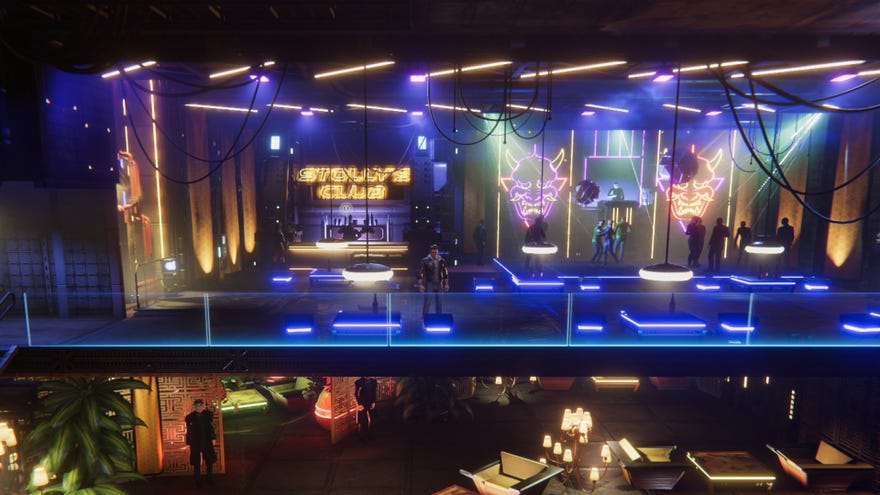
As a piece of nostalgia,Flashback 2didn’t remind me of Delphine’s 1992 Amiga puzzle platforming classic so much as some more infamous fragments of gaming’s past. Like the Attic bug in Jet Set Willy, for example, which made the game impossible to complete, or the unfeasibly strict time limit in a level of Robocop on the Commodore 64, which legend has it was reduced intentionally to hide glitches on the subsequent stage. Indeed, the chances of seeing the final parts of Flashback 2 in its current state seem so remote, you have to wonder what state they’d be in when you got there.
To be clear, then, I haven’t completed Flashback 2. In truth, I haven’t got very far at all. The biggest reason for this is that the save function on my review copy stopped working. In the first hour or so, the game autosaved regularly, while terminals in each location enabled manual saving. Then suddenly, nothing. The terminals, it seems, could only be used once – presumably a bug not a feature – and once I’d exhausted those uses, the autosave surrendered, too. Deleting save states to create room for more was fruitless, as was reinstalling the game.
Image credit:Rock Paper Shotgun/Microids
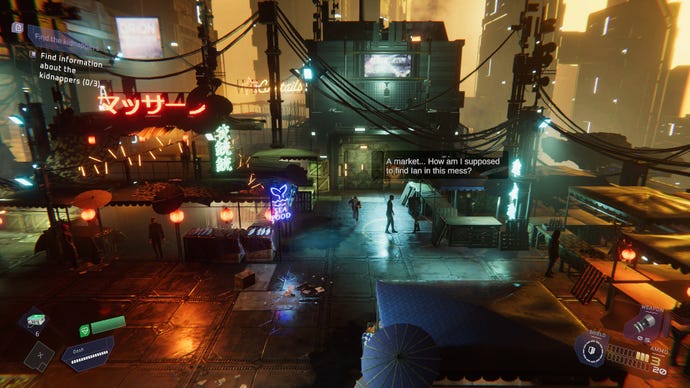
Image credit:Rock Paper Shotgun/Microids
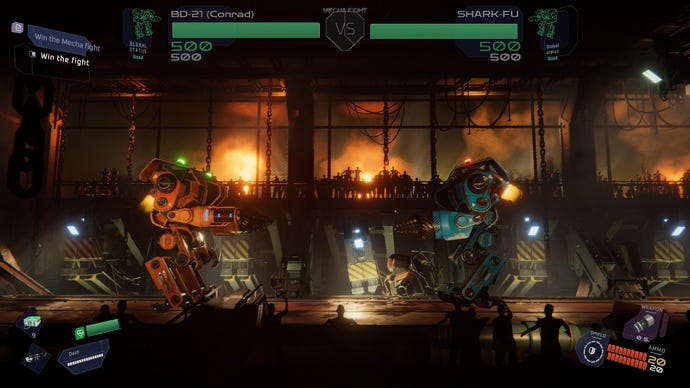
The plot embodies the same philosophy too. Conrad awakens in a strange city and has to look for his kidnapped friend Ian. Corleoni has information, but will only share it if you enter a local mech-fighting competition and beat the current champ, Shark Fu (a throwaway reference to Delphine’s risible 1994 Shaquille O’Neal vehicle, Shaq Fu). Now you need 1000 credits to buy a cheap mech, and the only way to get it is to head to the job centre and fulfil a few requests. With luck, Ian hasn’t been murdered or sold into slavery or starved to death in the meantime.
Image credit:Rock Paper Shotgun/Microids
There’s not much more substance in the rest of the game’s action either. The platform puzzling in the originalFlashbackrequired some thought, along with careful jumping, climbing and positioning to get the drop on enemies. Here, ‘puzzles’ are a matter of talking to highlighted NPCs until you’re given a door code, or opening a locker to find a key. Jumping and climbing, meanwhile, are context sensitive, available only near a ledge or gap, while enemies teleport in all around you.
For a start, the main, almost side-on view sees you constantly snagging on furniture, exacerbating frustrations with Conrad’s already sticky, cumbersome movement. Simply getting about can be a fiddly process, too. This is especially awkward in combat situations when the camera doesn’t readjust, as targeting enemies becomes horribly haphazard, not least whenever they draw close to Conrad. And all for what? Flashback 2 never really does anything with this extra depth. Once the novelty of moving into the background a bit to press a switch wears off, a simpler arrangement seems far more preferable.
Image credit:Rock Paper Shotgun/Microids
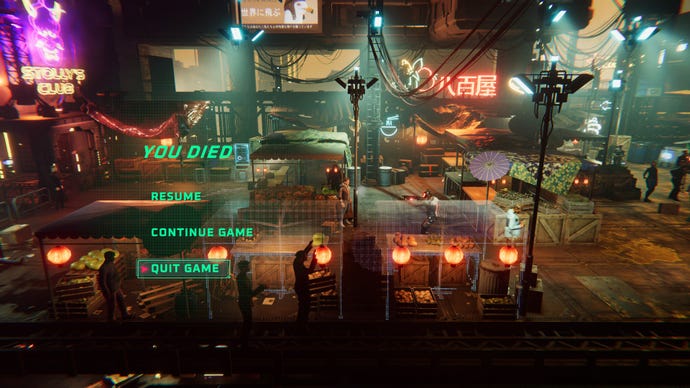
Certainly, the game’s shoddy, rushed technical condition backs that theory up. Performance is littered with stutters, while options are sparse – graphics settings allow a blanket selection of low, medium and high, along with toggles for dynamic resolution and DLSS, and controller support isn’t fully implemented. On death, you choose between ‘resume’, ‘continue’, and ‘quit’, and bizarrely ‘resume’ literally resurrects you in the scene, at no penalty. Well, except when the menu remains in place, covering the action, and all you can do is wait to die again. I also noticed that every NPC in a sitting position was stuck in a loop of rotating their heads side to side, as if watching an endless tennis rally. I don’t know when they started, but they’ve never stopped since.
I’ll admit, I did get some laughs out of Flashback 2’s ineptitude, but then it’s much easier to see the funny side when you haven’t forked out for the privilege. The stark truth once the laughter stops is that this is the worst kind of retro revival, a flashback only in the most unpleasant sense of the word to the buried traumas of gaming history. As a critic, I’d always rather write reviews as pieces of critical analysis than consumer guides. But with Flashback 2 there’s really only one thing to say: don’t buy it.
