HomeFeaturesDear Esther
Dear Esther dev 10 years on: “That was strange. That was quite a ride.“We talk to Dan Pinchbeck for Esther’s birthday
We talk to Dan Pinchbeck for Esther’s birthday
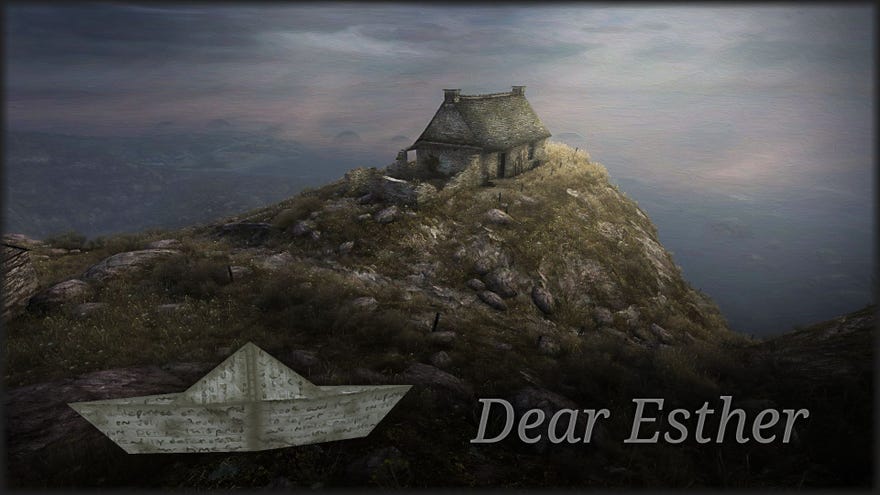
His main inspiration was the “quiet moments” that he found throughout games, even in the first person shooters that he was studying. “A lot of the call to action feedback loop falls away and you’re just kind of left. There’s those moments of real stillness where it’s just you and the world, and they’re really, really, really powerful.” He wanted to know whether a game could be made entirely from these atmospheric moments. “What if it was just that? Would that work? Would that be something that would be engaging?”
Dear Esther: Landmark Edition PC/Mac TrailerWatch on YouTube
Dear Esther: Landmark Edition PC/Mac Trailer

Maybe the mod’s popularity ought not to have been a surprise in retrospect, but at the time it certainly was. “I thought we’d probably get a couple of hundred downloads and people would tell us what was wrong with it,” Pinchbeck says. “Which they did!” But all of the feedback ended up being useful as Dear Esther grew from an unexpectedly popular mod to something bigger.
“Rob Briscoe got in touch,” he recalls. “He had just come offMirror’s Edgeand was looking for a downtime project. A little thing that he wanted to do in his spare time.” He asked if Pinchbeck and the others would be interested in him redoing the art for Dear Esther, which to that point had been mostly reusing Half Life assets. “Obviously, Mirror’s Edge is beautiful and we’re not going to turn away when a Mirror’s Edge artist goes, ‘Can I reskin your work?’” Pinchbeck says.
“Really, the aspirations were still really pretty modest,” Pinchbeck says. “We still expected we would hopefully shift a few thousand copies.” Before release they had some reasons to be optimistic, with press coverage and a notice from Valve that they would be put on the front page of Steam. “But even then we thought, it’s so experimental, it’s probably not gonna do very much.”
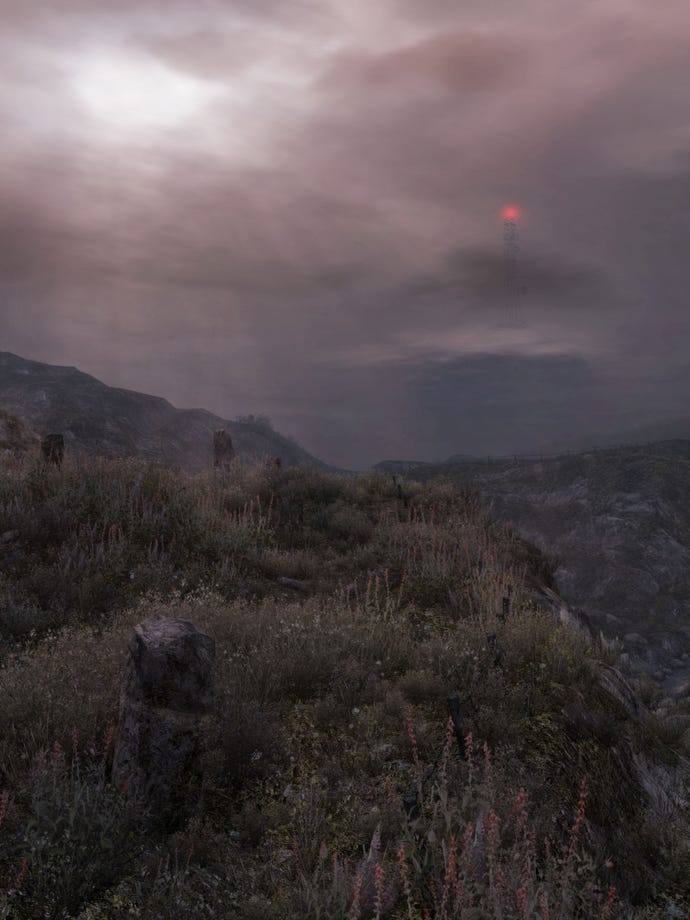
They sold enough copies to pay off the investment within six hours. “That first night was just kind of sitting there watching the numbers and going, ‘Okay, this isn’t what we were expecting to happen at all!’”
More recently, though, Pinchbeck thinks that the industry has shifted away from the cultural moment that led to Dear Esther. He thinks the game came out in “a bit of a zeitgeist” for discussion around how important story was to games. Both indie and AAA developers were “seeing the idea of using your emotional connection to the characters in the game,” he says, citing Uncharted andThe Last of Usas major examples in the AAA space. “I always felt sort of vindicated in terms of my PhD when [those] came out because I was like, that’s exactly what I’m talking about!” he laughs.

“Quietness, stillness, reflection, emotional connection, [these are things now] you see as being fairly standard in a lot of designers’ tool kits,” he says. “I don’t think that was just due to walking simulators, I think other games were heading in that direction as well. I think there was a bit of a wave, and walking simulators were kind of the outer edge of that wave. But a lot of people were moving in that direction.”
“I’m really happy to see real character-driven drama in games and a much greater sense of diversity of voices, and of stories,” he adds. “Obviously we’re got a very, very long way to go still, but it’s a very different industry than it was 10 years ago which can only be a good thing.”
And the recent anniversary has given Pinchbeck a moment to pause and look back on that decade, and Dear Esther’s place within it. “I’ve had to kind of pinch myself a couple of times and go, ‘that was strange. That was quite a ride.’”
