HomeReviewsDarkest Dungeon 2
Darkest Dungeon 2 review: a fast-paced roguelite down gloomy roadsCarry on my wayward daughters and sons…
Carry on my wayward daughters and sons…
Image credit:Rock Paper Shotgun
Image credit:Rock Paper Shotgun
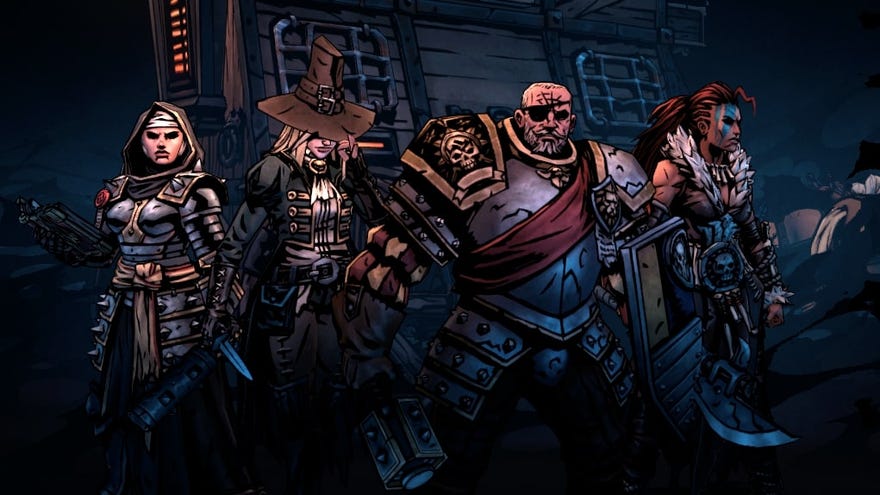
Just like its predecessor, Darkest Dungeon 2 leads with vibes and attitude. Every bit of art and atmosphere is subtly (or not-so-subtly) menacing, worn down, and melancholic, with Wayne June’s unmistakeable narration laying out the compelling story of a quest for answers that went too far. The background on how the world got this way is doled out in tiny morsels of tragic exposition after the conclusion of each run, so I always had new details to look forward to whether I won or lost. It’s very clear that reality is, as they would say in the Bay Area, “hella broken,” and that it’s somehow your fault as the nameless financier of these soul-rending expeditions into the darkness. But the nature of your crimes takes a long time to reveal itself.
Darkest Dungeon II - Launch TrailerWatch on YouTube
Darkest Dungeon II - Launch Trailer
Rather than setting out into various standalone regions like in the first game, each run of Darkest Dungeon 2 consists of four (probably) doomed heroes on a carriage ride through a succession of such deadly themed locales – from a spooky forest to a clearly Innsmouth-inspired fishing village. You can steer to run over collectible loot and chart a path at each fork in the road. I loved the amount of strategic thinking and resource management that goes into plotting a course. You can try to fight more turn-based battles for more loot, or try to avoid them if your party is looking a bit worse for wear. Some paths will damage your wheels or the chassis of your carriage, forcing you to fight a desperate ambush battle if you break down completely. A given path might lead to great rewards, like a hospital where you can remove your adventurers' randomly-generated negative traits, but force you to pass through an Oblivion Tear, which will make the entire rest of the region more dangerous as the punishing force of Loathing grows stronger.
Image credit:Rock Paper Shotgun
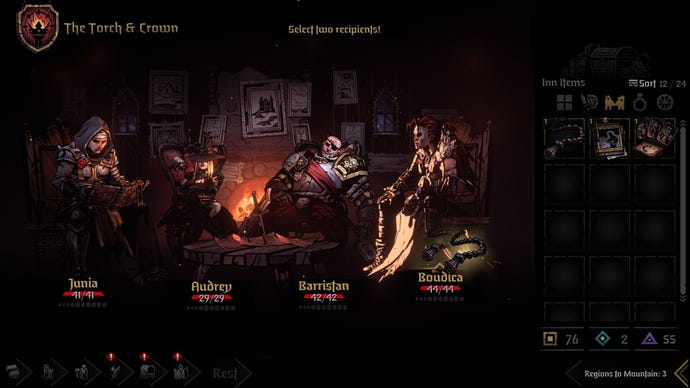
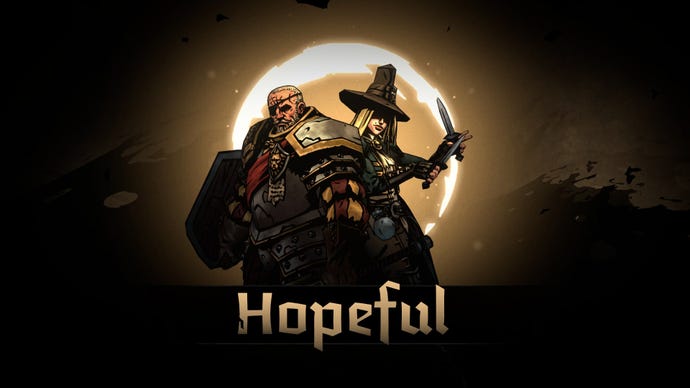
At the heart of Darkest Dungeon 2 is this relationship system, where based on their mutual attitudes, your bloodthirsty barbarian girl and the dour grave-robber could wind up deeply in love… or bitter rivals. This will either buff or debuff one of their abilities, granting a boon-like healing to the other person in the relationship in the case of a positive attitude, or a debuff in the case of a negative one. I found that whether or not I could build strong, supportive bonds within my party was the number one factor in whether a run would be successful or not, lucky loot drops or unfortunate battle rolls be damned. And that changed how I thought about the various risks and rewards on the road to ruin in enjoyable ways.
Progression is generally a satisfying mix of permanent power boosts, like increasing a specific class’s stats or making your carriage more resilient to damage, and adding more and better gear and combat items into the available loot pool. This all takes place at the Altar of Hope, the new home base in which you are trying to literally put reality back together as you spend the main persistent currency, candles. You can find some of these along each leg of your journey and get a healthy lump sum for making it to the end of an area or defeating one of the five deadly act bosses.
Image credit:Rock Paper Shotgun
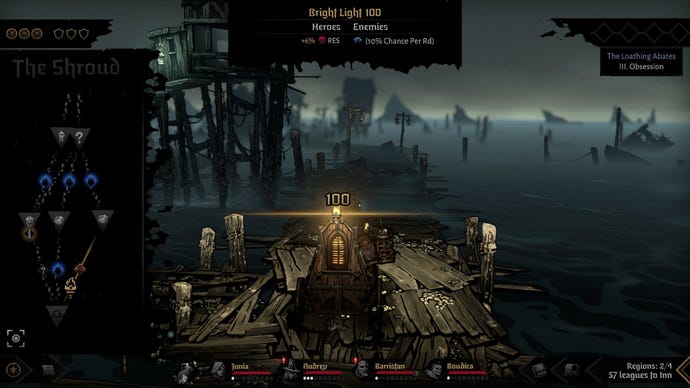
And those bosses can be quite challenging, requiring you to pay careful attention to their resistances, special abilities, and other various quirks to succeed. Some classes just suck against certain bosses, which means you eventually do have to think about building the party for the situation rather than having total freedom. But most of Darkest Dungeon 2’s classes, from the fairly straightforward Man-at-Arms to more bizarre characters like the pyromaniac Runaway and the self-sacrificing Flagellant are great fun to play with.
Image credit:Rock Paper Shotgun
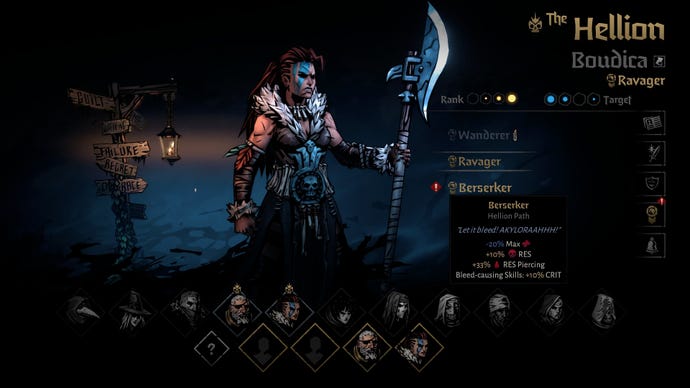
Image credit:Rock Paper Shotgun
The fact that this muddies the waters in terms of how persistent any individual character is made it more difficult for me to get attached to specific party members like I would in the first game. Likewise, the relationships that manifest between them only last for one region before being re-rolled. This means you can patch up a rocky relationship between two heroes, which is good, but the two who fall in love may simply forget all about each other between runs, even if they both survived, which kind of sucks. It also means if you want to train up a “B-Team” and not risk your all-stars on a given run, they will have to all be of completely different classes. You can’t have a BackupHellionor a Jester Understudy.
It just rubs me the wrong way and makes it harder to develop long-term relationships with my favorite little murder guys. And isn’t that what this game is supposed to be all about? I’m not as heartbroken when they die, and they all feel kind of interchangeable to an extent. Memories and locking in positive traits can partly serve the purpose of feeling like I’m really building up this one, specific badass. But I miss the roster management style of the originalDarkest Dungeon, and this feels like a simplification simply for the sake of simplification that does more harm than good.
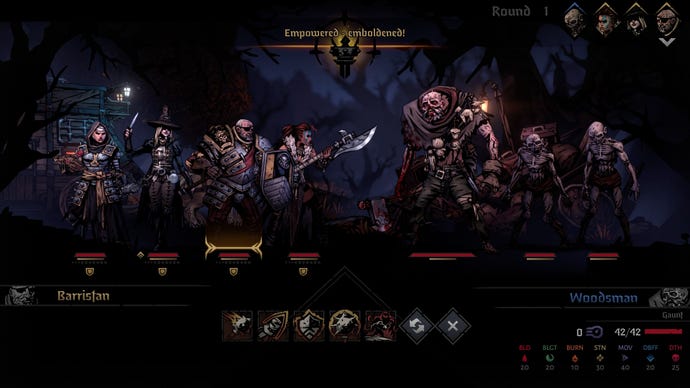
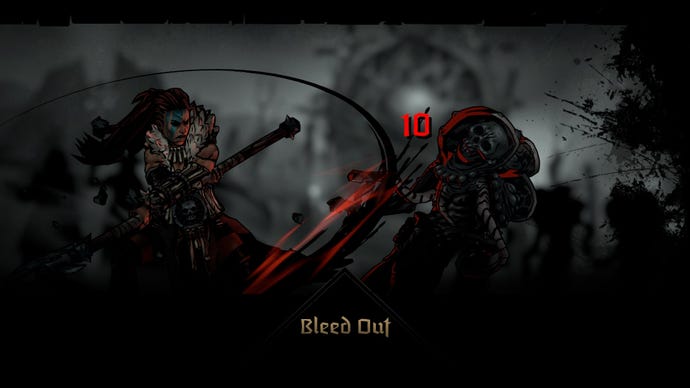
I could spin a sickly, blood-slick yarn almost as long again as I’ve gone on already about the combat, but the upshot is that it’s pretty great. Each individual battle can be very punishing, but healing in-between is quite forgiving, so unless you’re not steering headlong into every possible confrontation. So it generally works out to think about each fight (or small sequence of fights in some cases, like dangerous lairs where minibosses lurk) as a singular puzzle. There’s a ton of variety in enemy groups, both visually and mechanically, with almost all of them having multiple viable ways to go about sowing the earth with their bones.
Image credit:Rock Paper Shotgun