HomeNewsCities: Skylines II
Cities: Skylines 2 will simulate layoffs, homelessness and bankruptciesHow different economic agents interact
How different economic agents interact
Image credit:Paradox Interactive
Image credit:Paradox Interactive
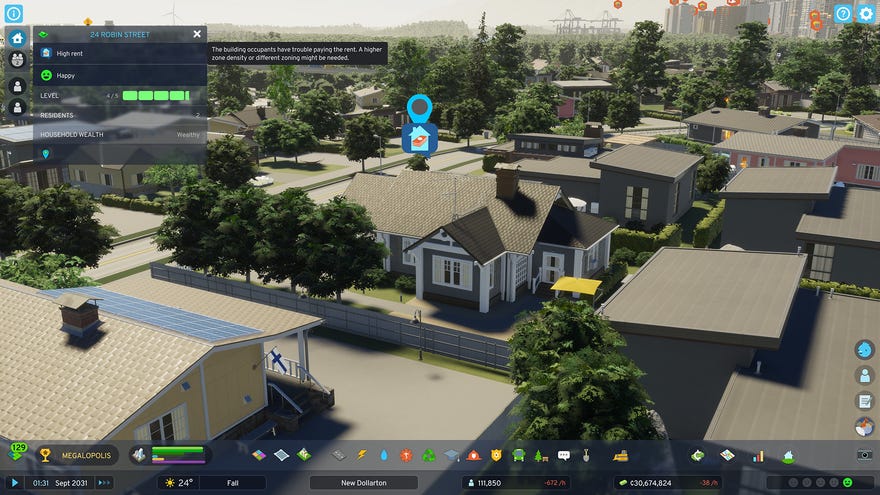
Paradox have posted aCities: Skylines 2developer diary in which the studio discusses the new game’s rather elaborate-sounding economy simulation. This follows equally knotty breakdowns of itszoning tools, which allow you to mix architectural styles, and itsroad traffic system, which will hopefully dispense with some of the pathfinding issues from the originalCities: Skylines. In unravelling how individual agents - households, businesses or city services - function within the simulation, the post also touches on the topic of homelessness, a subject the 2014 gameleft unaddressed.
The new system is “similar in concept” to that of the first game, but has been redesigned to offer a more convincing, organic sense of production and resource exchange, without being too tricky to get into.
“We wanted to create a deep and complex system without it being too complicated for you to manage, allowing you to spend more time building the city rather than worrying about every minute detail at every possible turn,” the post reads. “The system is modelled after real-life economic models to tie more realism into the game, and it is designed to balance itself out in most cases to support both new players and newly-founded cities in their first steps to becoming bustling metropolises.”
Skylines 2 features government subsidies for new players which take care of a portion of earlygame expenses, and which extend to unemployment benefits for your citizens. These sources of aid decrease as the city grows and you get to grips with the game’s simulated economy, in which agents make decisions in response to each other and your choices as mayor.
The economy simulation broadly consists of the flow of resources between households, businesses and city services. Each of these agents has an income and expenses they must balance: households buy resources and pay rent, while businesses pay rent, buy resources and turn them into other resources for sale. This is reflected in the game’s zoning system: households look for zones with homes and workplaces, industrial companies need the requisite resource access, and commercial companies need a steady supply of commodities and customers.
Economy & Production I Feature Highlights Ep 9 I Cities: Skylines IIWatch on YouTube
Economy & Production I Feature Highlights Ep 9 I Cities: Skylines II

Should a household be unable to pay rent, it will look for new, cheaper accommodation that produces the maximum possible Happiness. It might also consider moving out of the city. If the household lacks the funds either to find a new place or leave the city, its members become homeless. “In this case, they can live in the city parks until their living situation changes,” the developer diary concludes. Companies may also become bankrupt, fire their employees and have to abandon their offices. There’s a lot more on that front inthe full piece(thanks for spotting this,Gamesradar).
Portraying homelessness in a videogame is obviously a complicated act. It may be useful to compare the above, unavoidably impersonal, top-down modelling with games that focus on the individual experience of living without a home, such as the Shelter-commissionedSpare Set. Back in 2021, Big Issue seller Dave Campionpitched a game of his ownabout his time on the street - an RPG in which you take control of different Big Issue vendors, designed to show “the difference between being homeless in different situations and different places”.
Campion’s hypothetical game would explore questions of addiction, street violence and your standing with the community. It would also follow the emotional process of moving back into a house, which he described as “a bit likeThe Simswhere you have to deal with keeping your house tidy, getting a job, dealing with the challenges of living indoors.” On the other hand, Campion wrote, “success wouldn’t necessarily be moving off the streets and into a home and a job for every character. That isn’t success for me and sometimes it is about making life comfortable for yourself. Overall happiness would be the most important thing I’d measure.”
