HomeReviewsAtomic Heart
Atomic Heart review: a mad science experiment that yields mixed resultsYammer and sickle
Yammer and sickle
Atomic Heart - Gameplay Overview TrailerWatch on YouTube
Atomic Heart - Gameplay Overview Trailer

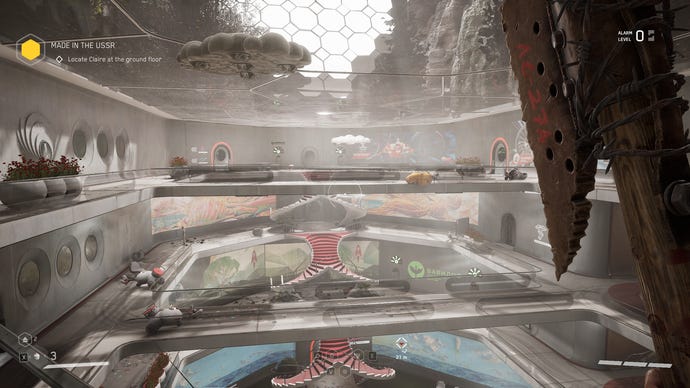
The Irrational inspiration is clear. The stonking spectacle of Facility 3826, as the mountainous base is known, is a match for some of the best views throughout Rapture and Columbia, and the first few hours in particular lean into a similar survival horror feel to the original BioShock’s early stages. But there’s more than a hint ofHalf-Life 2here as well, in the way that Atomic Heart gives each chapter a certain flavour before dropping it and moving on to the next. Horror turns to open-ended action, which turns to puzzling, which turns to corridor shooting, which turns to psychological drama, and so on. Like I say, it’s ambitious, and a lot of the time it all works quite well.
When it doesn’t, though, the gap between what Atomic Heart gets right and what it gets wrong looks wider than Russia itself. Take the combat. Much of this is technically sound: ballistic weapons have a delightful kick to them, with shotgun blasts sending rogue bots tumbling backwards or scything them clean in half, and once you get a feel for dodging, even one-on-one duels can thrill. Watching for attack telegraphs is crucial, and getting in some return hits after a perfectly timed dodge never fails to satisfy.
Up you go, lads. |Image credit:Rock Paper Shotgun/Focus Entertainment/4Divinity
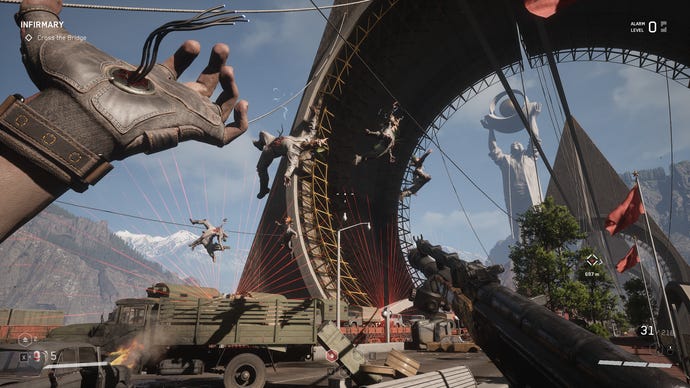
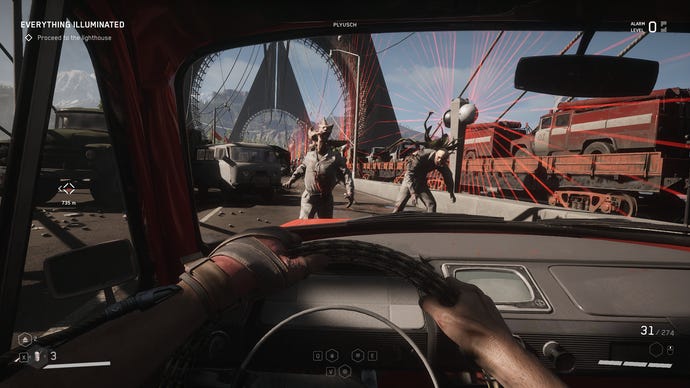
All the components for a great shooter are here, then, but there are problems. The first is that Atomic Heart stretches out certain encounters far too long for its own good. The high durability of most enemies – even cannon fodder humanoids take several headshots – can make for a fun challenge when it’s, say, 1v3, but you’re often facing twice that many or more, and there’s only so much meat you can grind before excitement turns to frustration. Worse, both robotic and organic enemies can replenish their ranks mid-battle, either through repair drones or flying parasites creating more flower monsters out of the facility’s dead. Fail to prioritise these irritants over the ones that are actively firing rockets at your feet, and a previously exhilarating dust-up can become a chore. Not to mention a drain on already limited ammo and health supplies, necessitating yet more drawer-rummaging.
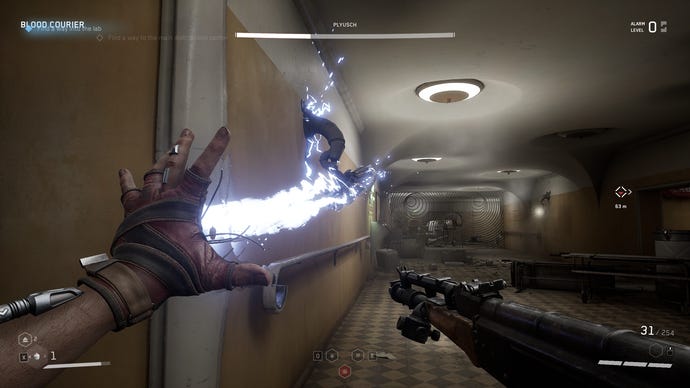
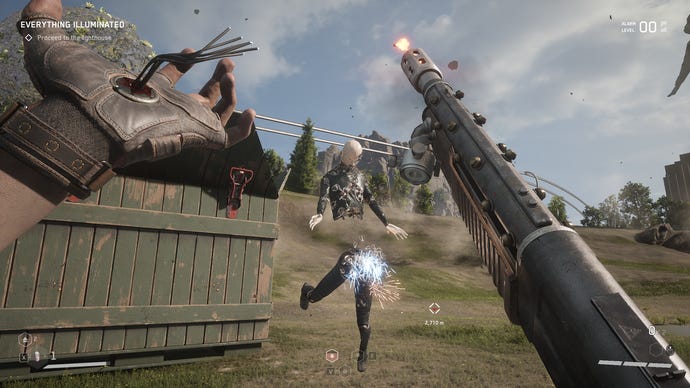
The selection of glove powers is disappointing too. The always-equipped Shok, a jolt of electricity, never stops being useful but the only ability I really cared to upgrade was the telekinesis lift. While the cryo freeze effect looks nice, it’s ultimately an inferior crowd control tool to Mass Telekinesis, and not one but two of the others are only good for boosting the elemental damage of Shok and certain upgraded weapons. There’s almost no interesting way in which these powers interplay with the environment or each other: they’re mechanics without systems, if you’ll forgive the immersive sim lingo.
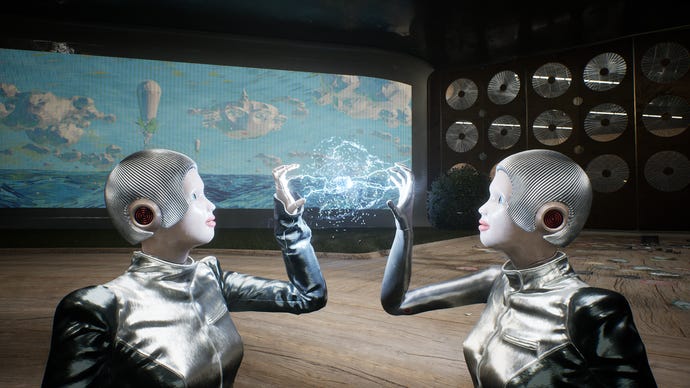
Stealth is technically an option, but enemies are usually too eagle-eyed and sound-sensitive to fall victim to it, and it’s not really a style you can spec for with upgrades. Your primary method of interacting with the world of Atomic Heart is to blast holes in it, which again, can be mightily enjoyable one minute only to become a slog of attrition the next. Which is even more of a shame, given some of the marvellously designed arenas. Cavernous Soviet-punk laboratories, glistening museum halls, ballet theatres in the midst of an android dance performance… Atomic Heart regularly serves up fantastic sets for its battles, even if what follows is only occasionally worthy of them.
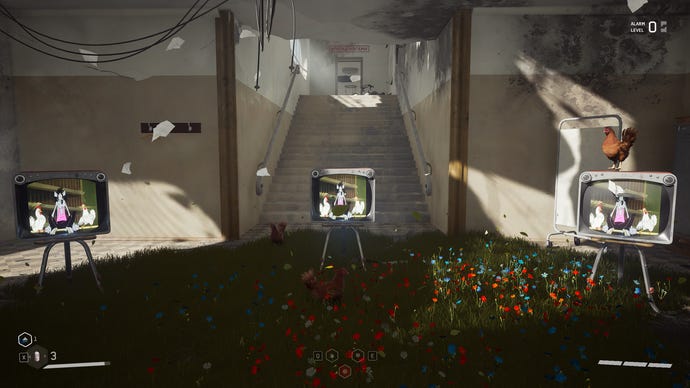
You’re never too far from a piece of striking sci-fi architecture.
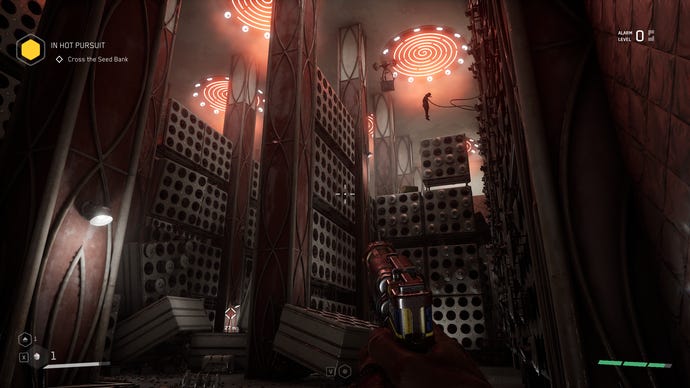
P-3 himself presents another duality problem. Those opening hours, with their survival horror focus? This guy talks through them like an annoying cinemagoer. Barely a minute passes without a sweary rant or sarky quip, often in the form of attempted banter with the glove, and even the lines that don’t undermine the rest of the game’s tone fail to be endearing or funny. “Fuck my life”, he moans, unironically and about sixty years before it became a phrase. “Crispy critters!”, he inexplicably exclaims, two or three times per hour for the full length of Atomic Hearts’ 15-ish hour runtime. Not every game needs prestige characterisation, but I’d prefer if my own mouthpiece wasn’t spoiling the atmosphere that Atomic Heart otherwise does a pretty fine job of building up.
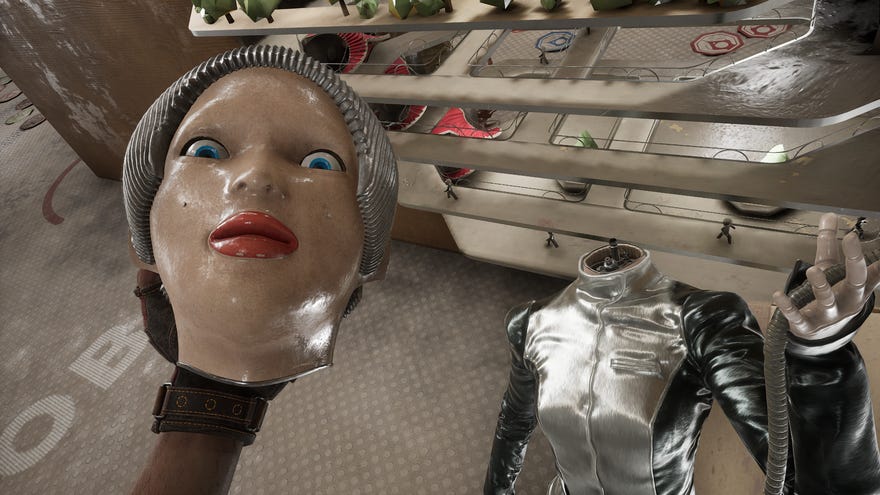
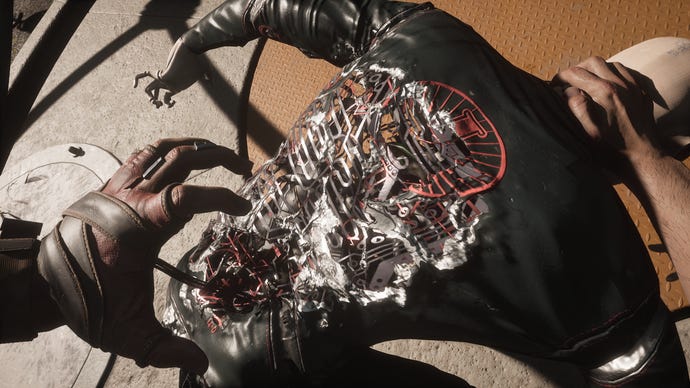
There’s some creepily detailed damage modelling on the bots. Melee strikes leave thick silver gashes, while bullets and energy weapons can blast exoskeletons away to reveal the mechanisms underneath.
Ultimately, your only options in this empty world will be to proceed to the next waypoint or to get in a scrap with some patrolling bots, the latter being something you can do plenty of during actual, fully-designed combat encounters if you stick to the former. And it’s not even there to preserve a BioShock/HL2 style unbroken perspective – on several occasions, Atomic Heart rolls conventional cutscenes that end with P-3 in a completely different location. Between this, the general lack of things to do, and the fact that the game is at its best during tight fights inside carefully designed arenas, the inclusion of an open world is a deeply strange one.
Atomic Heart is a better game inside the depths of the facility than above ground.
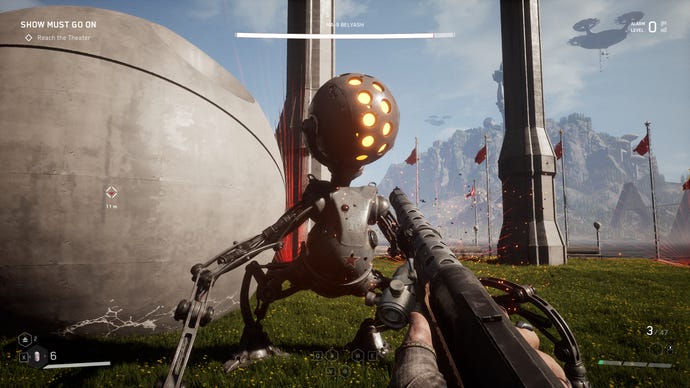
This big boy is the Belyash, pictured shortly before setting the entire arena ablaze with his face.
This is not to downplay Atomic Heart’s technical accomplishments in other places. It really does look superb, visually and aesthetically, and despite this it runs on PC with much greater ease than other recent big releases likeForspokenandReturnal. An RTX 3070 with Quality DLSS enabled is enough to get the highest ‘Atomic’ preset purring at 1440p, hitting 90-110fps in the open world and at a solid 144fps in most interiors. The same card and settings will generally stay above 70fps at 4K, too. (Oddly, though, themuch-advertised ray tracingsettings weren’t enabled in the review build I played; I’ve contacted Mundfish to check that these will be ready for launch.Update:they will not! Wow.)
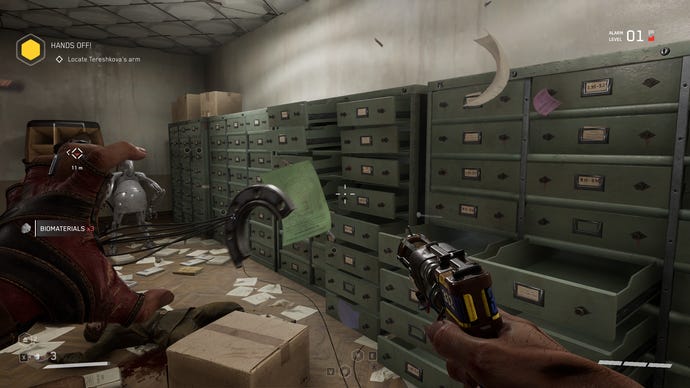
I’ll say this for the looting, hoovering up parts with the glove’s TK power is amusingly messy.
In addition to the synthy OST, Atomic Heart is peppered with licensed songs from Mundfish’s native Russia. Which unfortunately brings us to another issue entirely: what reckoning, if any, this Soviet-themed game has with a nation that back in the real world is waging an unjustifiable war on its neighbours.
Eurogamer has a good overviewof the concerns surrounding Atomic Heart’s funding and Mundfish’s unwillingness to explicitly condemn the invasion of Ukraine. But I’m not convinced that partial funding from a company with one dodgy employee is a smoking gun, and frankly, asking the developers to speak out when doing so can carry aprison sentencefeels like blaming someone for living under a dictatorship. And while Atomic Heart is being published on the state-affiliated VKPlay platform in Russia, here in the Anglosphere it’s not going to make any meaningful contribution to the Kremlin’s coffers.
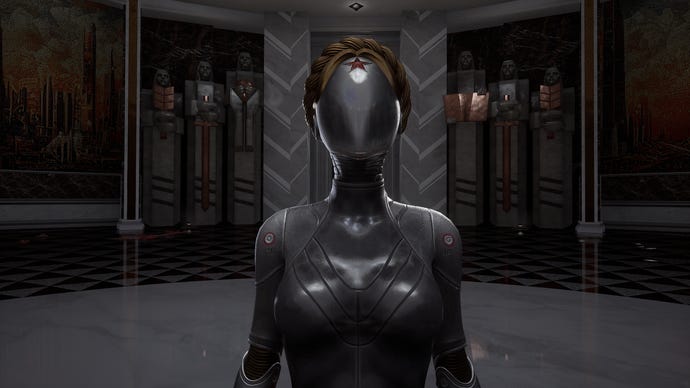
Not sure about the sexbot ballerina bodyguards either.
Dream sequences add a dash of mystery.
That said, Atomic Heart’s lack of satirical bite might just be one of the most consistent things about it. For every miserable onslaught of respawning bots, there’s an intoxicatingly tense run-and-gun battle. For every work of artistry in the sound design and environments, there’s a scene of utterly sub-par scripting. It’s glorious and tedious, polished and patchwork all the same time, and while there’s an anarchic part of my brain that wants more ambitious-yet-wonky games like it, stronger is my hope that Mundfish’s second game has a tighter grasp on its own strengths and weaknesses.
