HomeHardwareFeatures
Asus ROG Swift OLED monitor hands-on: bright, bold windows into a possible PC gaming futureFirst impressions of the ROG Swift PG48UQ and PG42UQ
First impressions of the ROG Swift PG48UQ and PG42UQ
Cult Of The Lamb Is Properly Grim, But Very Good | My Fav Thing In…. (Cult Of The Lamb Review)Watch on YouTube
Cult Of The Lamb Is Properly Grim, But Very Good | My Fav Thing In…. (Cult Of The Lamb Review)

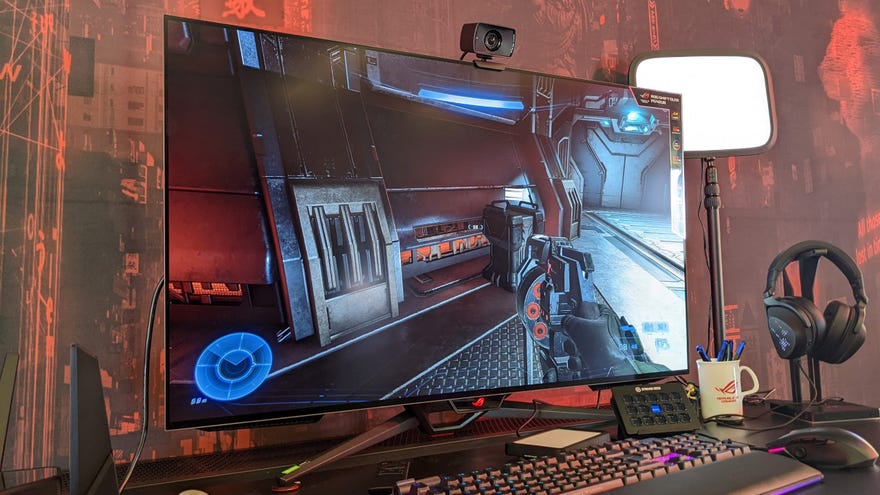
Both models are 4K, with a maximum refresh rate of 138Hz over DisplayPort 1.4. Which looks odd to my 144Hz-accustomed brain, but comes close enough. Taking advantage of these specs will naturally demand one of thebest graphics cards, though playing the likes ofHalo Infiniteand MotoGP 22 suggested these monitors can keep up on speed too. Motion is slick and ghosting-free, a particular relief given how my OLED TV at home tends to scramble the pixels on fast-moving objects. None of that here, thankfully.
This is the ROG Swift PG48UQ (three of them, in fact). That’s the ROG Swift PG42UQ, complete with stand, in the header image.

Nvidia G-Sync works pretty too (AMD FreeSync is also compatible), and while I couldn’t measure the screen brightness, both the ROG Swift PG48UQ and PG42UQ can supposedly hit up to 900cd/m2. That’s promising for HDR-supporting games, and in conjunction with OLED’s natural ability to create perfect, inky blacks, contrast looks good too. The contrast ratio, also according to Asus, is 1000000:1, or about 2500 times higher than a decent IPS monitor.
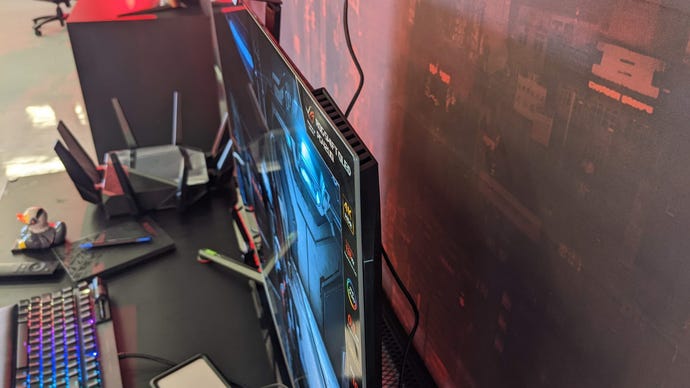
OLED panels aren’t comprised of as many different component layers as LCD, so these monitors are wafer thin with barely-there bezels.
With that in mind, there are even more wealth-withering gaming monitors out there, including Asus’s own £3299ROG Swift PG32UQX. That uses Mini LED tech that, while still nailed to an IPS panel, is technically newer and more futuristic than OLED. Which makes me wonder – is this OLED’s time to shine? This tech is a step forward over most alternatives, the PG48UQ and PG42UQ convince as proof of its gaming credentials, and TVs and phones have shown that it can get cheaper in time – but at the same time, it’s not bleeding edge, so won’t be the sole reserve of the hyper-enthusiast crowd.
Maybe in a couple of years, OLED gaming monitors will be the go-to choice for anyone willing to spend a bit for optimal picture quality. Suppose we’ll find out eventually – and in the meantime, I’ll be looking to spend a little more quality time with Asus’s efforts. And my calibrator.
