HomeGuidesApex Legends
Apex Legends settings guide: reduce lag, increase FPS, display ping, and moreBest settings in Apex Legends for high fps and minimal lag
Best settings in Apex Legends for high fps and minimal lag
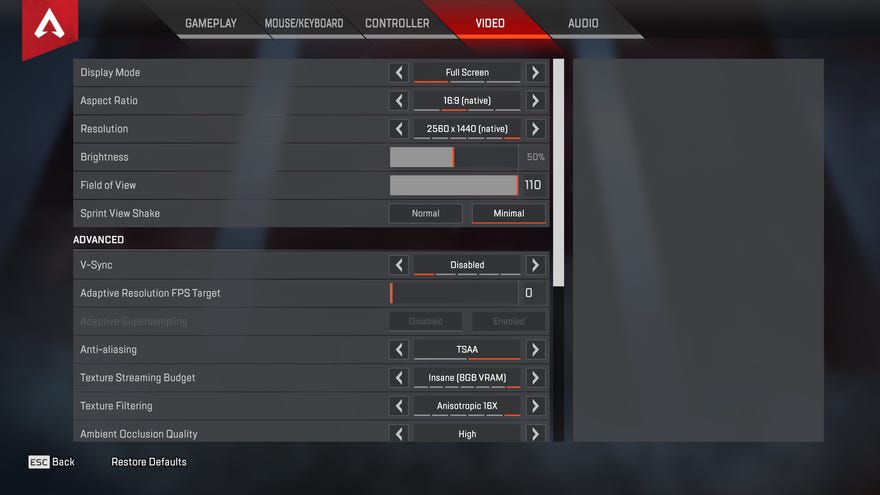
Success inApex Legendsrelies not just upon skill, reflexes, and game-sense, but also on how well you can actually run the game. Thankfully, Apex Legends has a decent array of video (and other) settings to customise between or during matches, all of which we’ll go over in our detailedApex legends settings and performance guide.
We’ll also go over one of the most prominent causes of low FPS and lag in Apex Legends and walk you through how to fix this issue, and we’ll show you how to display both your current framerate and your Ping in-game.
On this page:
Watch on YouTube
Watch on YouTube

Apex Legends system requirements
It can be tricky when you first start playing a new game to know exactly what you can expect from both the game itself and the system you are running it on. To help with this, we’ve put together a list of the minimum and recommended specifications for running Apex Legends on your desktop or laptop. So as long as your specs are somewhere in this range or higher, you should be good to go.
Here are the Apex Legends system requirements:
Apex Legends settings for best performance
Below we’ve listed each of the video settings you can change, and the impact this may have on your game experience and on your frame rate.

How to fix Apex Legends lag
One common issue which very quickly made itself known shortly after Apex Legends' release was that a large minority of players were achieving a far worse frame rate than expected even at the lowest settings. This happened to me, in fact, when I installed Apex Legends on my laptop. Even on the lowest settingsandhaving set the resolution to 1280x720, I still was only reaching about 15 FPS.
I’m not going to promise that this simple fix will solve everything, because maybe something different is happening to you and your system than what happened to me. But this is what worked for me and a great many other players. The instructions below are for Windows 10 systems:
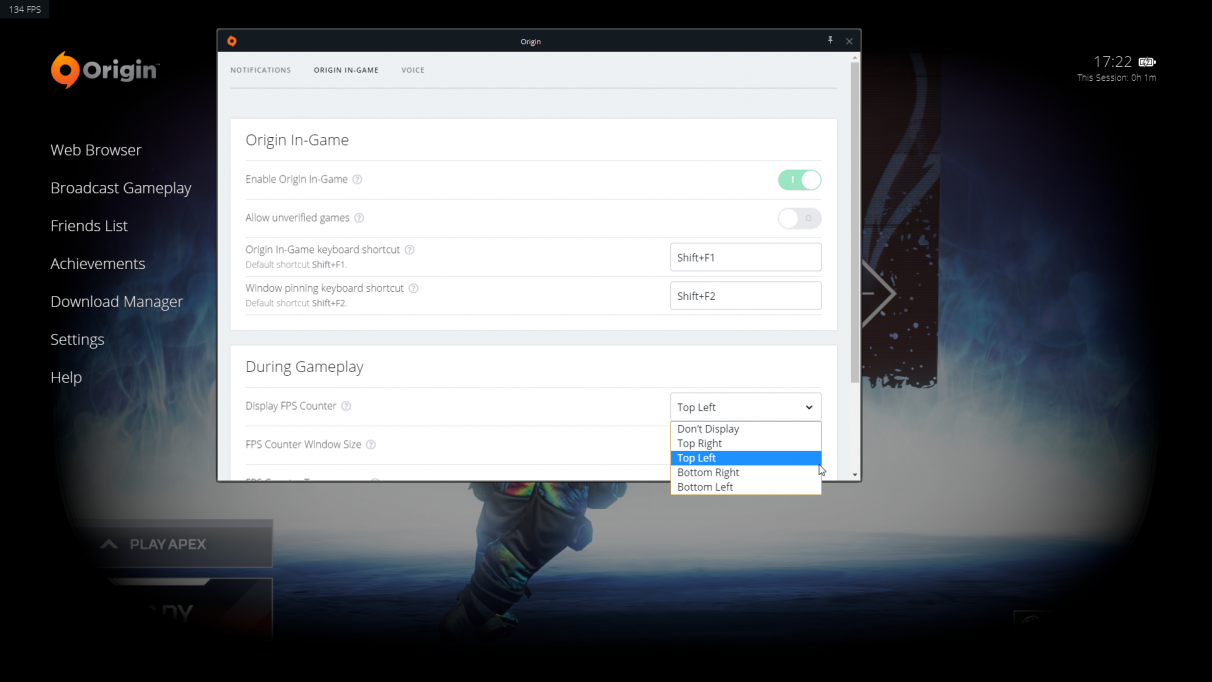
How to show FPS and Ping in Apex Legends
There are two ways to display your FPS while playing Apex Legends (without turning to third-party software like Shadowplay or Fraps, of course), and both involve Origin settings.
First method:
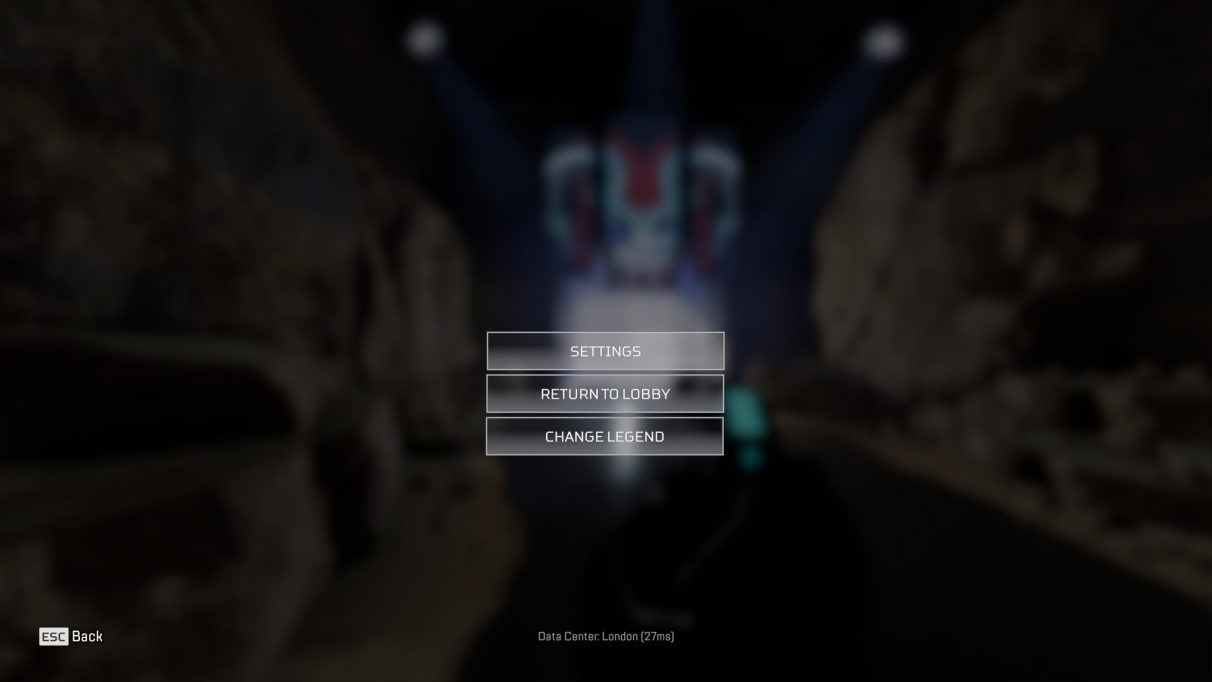
Navigate to the Gameplay tab of the Settings menu, and at the bottom of the first section of settings, togglePerformance Displayon. This will give you a new HUD element in the top-right of your screen while in a match, which displays not only your FPS but also your Ping (server latency), packet loss, and more.
Second method (Origin):
That’s everything we have to offer on Apex Legends settings and performance, so hopefully now you’ve got a handful more tricks up your sleeve with regards to eeking out as many frames as you can from your system. Take care, and see you on Olympus. I’ll be the one in the distance that looks like an anti-aliasing glitch.
