HomeHardwareNews
AMD Ryzen 7000: prices, specs, and release date confirmedEverything you need to know about AMD’s next gaming CPUs
Everything you need to know about AMD’s next gaming CPUs
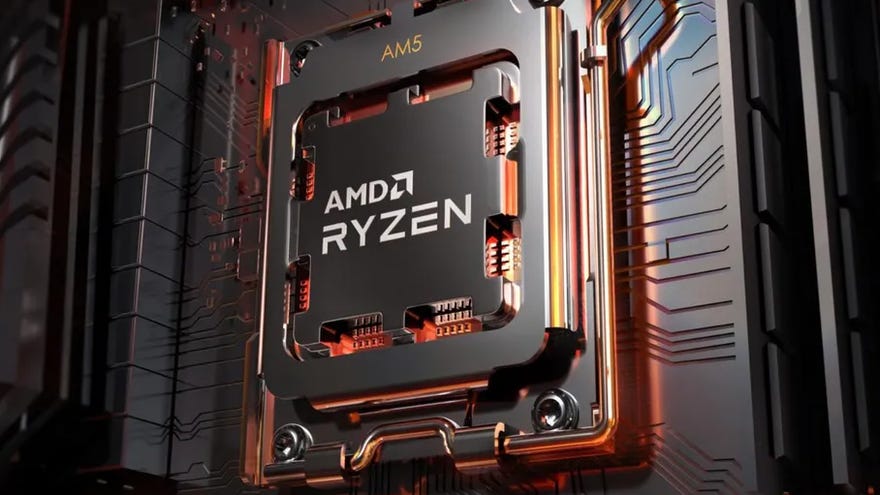
AMD have, at long last, fully unveiled theRyzen 7000series of gaming CPUs – specs, pricing, the lot. There’s even a release date, September 27th, which will see AMD launch an initial salvo of four mid-to-high-end chips. These will aim to leapfrogIntel’s 12th Gen Alder Lakeprocessors, several of which are among thebest CPUs for gamingwe’ve yet tried, with the aid of a new Zen 4 core design, DDR5/PCIe 5.0 support and some ambitious clock speed boosts.
AMD Premiere: together we advance_PCsWatch on YouTube
AMD Premiere: together we advance_PCs
There’s a lot of deets to sort through, so howzabout we split them up? Here’s everything you need to know about Ryzen 7000, from the new generation’s release plans to its claimed gaming performance and motherboard requirements. You can also watch the full Ryzen 7000 reveal event in the embed above, if you’ve got half an hour free.
AMD Ryzen 7000 specs
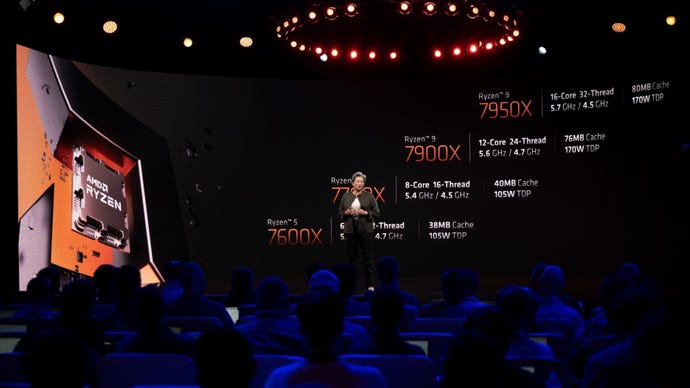
First up, here are all four confirmed CPUs so far, from the crowd-pleasing Ryzen 5 7600X to the premier Ryzen 9 7950X. I wouldn’t worry too much a lack of lower-end hardware; AMD’s Ryzen 5000 series launch only involved these chips’ direct predecessors, with cheaper Ryzen 5 models coming later. You can probably expect the same this time around.
It looks like AMD are sticking with their total core/thread count formula: for example, the Ryzen 5 7600X has six cores and 12 threads, just like theRyzen 5 5600X. However, the 7000 series uses the all-new Zen 4 core, which is based on a more efficient 5nm manufacturing process and can apparently manage up to 13% higher IPC (instructions per cycle – essentially, how many tasks the CPU can execute in one clock cycle).
In something of an Intel-esque move, clock speeds are also much higher across the board, with the Ryzen 9 7950X able to boost itself all the way up to 5.7GHz – that’s even higher than the blazing peak of Intel’s 5.5GHz flagship, theCore i9-12900KS. Between this and the IPC upgrade, Ryzen 7000 should not just complete clock cycles faster, but get more work done per cycle as well.
The catch appears to be higher TDP values, ranging from 105W on the Ryzen 5 7600X to a toasty 170W on the Ryzen 9 7950X. These are still lower than the “maximum turbo power” ratings of their respective Alder Lake equivalents, but don’t be shocked if Ryzen 7000 makes greater demands of your cooler than Ryzen 5000.
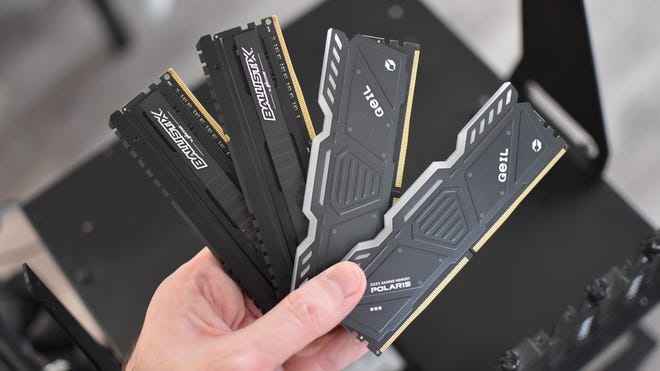
Speaking of, Ryzen 7000 also introduces the new AM5 socket, replacing AM4 – this does mean you’ll need a brand new motherboard, but AMD have confirmed that any coolers which currently mount to AM4 should fit AM5 as well. However, you’ll definitely need to invest in some DDR5 RAM, as Ryzen 7000 doesn’t just make it an optional alternative to DDR4 – it’s the only kind of memory that will work.
Another Zen 4 tuneup is applied to the L2 cache, which is being doubled in size compared to the previous Zen 3 design. In theory, this could help games performance as more data will be “on hand” in the cache (therefore saving the time and effort of grabbing that data from a storage drive).
All four chips also include AMD Radeon integrated graphics, so it’s not clear why AMD’s own specs list states that a dedicated graphics card is required for all of them. That said, these CPUs are designed for use in gaming PCs that would have a separate graphics card anyway, so it’s a bit of a non-issue.
AMD Ryzen 7000 performance
Obviously it will take some independent testing to see how typical this level of performance actually is. Alder Lake’s clever Performance/Efficient core hybrid design made it the first Intel CPU generation in years to wipe out Ryzen’s multithreading advantage, while beating it on single-core power for good measure. Ryzen 7000 therefore has a lot of ground to make up, especially in the eyes of those who don’t just use their gaming PC for games.
I’d expect gaming performance itself to be more close-run than this apparent F1 2022 drubbing suggests, though in a lot of games, Ryzen 7000 would only need to find a scant few frames per second to outpace Intel’s 12th Gen chips. While Intel’s CPUs do lead the Ryzen 5000 series in just about all of our own benchmark tests, it’s rarely a yawning FPS chasm - single digits of difference, usually. We’ll see in September whether the newer family’s clock speeds, IPC, and cache size enhancements are enough to fill those gaps.
Friendly reminder, in any case, that a CPU upgrade will only ever produce small gaming gains unless you’re swapping from a very old model. If your processor is only a few years old, you’ll probably get more FPS impact from upgrading your GPU to one of thebest graphics cards.
AMD Ryzen 7000 prices
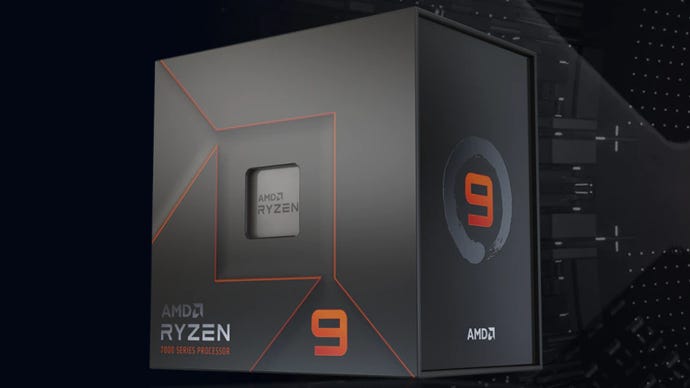
Here’s how the first four Ryzen 7000 price up. There’s no premium for the spec upgrades, as these are almost exactly the same as the Ryzen 5000 launch prices; in fact, the Ryzen 9 7950X starts at $100 cheaper than the Ryzen 9 5950X did. I’ve also asked both AMD and their external PR firm for UK prices, and will add them if I hear back.
Their Intel rivals have had the benefit of a few months’ time for price drops, so in most cases the Ryzen 7000 CPUs will release as the more expensive option. You’ll also need to factor in the cost of a new compatible motherboard (more details on these below, but they’ll start at $150 / around £130) and some DDR5 RAM.
The Ryzen 7000 release date, if you skipped the opening paragraph (uhh!), is September 27th 2022. That’s a worldwide release, too.
AMD Ryzen 7000 features
Image credit:Rock Paper Shotgun
The new CPUs’ PCIe 5.0 support will also open up potential for faster storage and graphics cards, as well as improved power delivery. Like DDR5, this is an upgrade with the future in mind, as consumer-grade PCIe 5.0 peripherals aren’t available yet, but for storage in particular it could be something worth having in your locker. PCIe 5.0 SSDs are likely to be much faster than even thebest SSDsthat use the PCIe 4.0 interface.
Another departure from Ryzen orthodoxy will be the inclusion of integrated graphics, specifically based on AMD’s existing RDNA2 architecture. Whereas Intel have added an onboard GPU to their desktop Core chips more often than not, AMD have typically reserved them for very specific Ryzens. With the Ryzen 7000 family, integrated graphics will be more of a standard feature. Does this make them a better deal when you’re likely going to be using a dedicated graphics card anyway? Unlikely, but it’s there if you want it. And AMD have confirmed that Ryzen 7000-ready motherboards – more on these below – will include the requisite HDMI and/or DisplayPort outputs too. These can be specced up to premium HDMI 2.1 and DisplayPort 2 standards, joining 20Gbps USB 3.2 2x2 connectivity on those rear I/O panels. I’ve previously seen rumours of 40Gbps USB4 support as well, though this isn’t anywhere on any of the final specs lists as of the August reveal event.
AMD Ryzen 7000 socket, chipset and motherboards
RIP the AM4 socket, an AMD stalwart ever since it was introduced with the very first Ryzen CPUs in 2017. Ryzen 7000 chips will only fit in the new AM5 socket, with no backwards compatibility.
If you intend to upgrade straight from an AM4 build, you should be able to re-use your CPU cooler, though between the socket change and the switch to DDR5, a new motherboard is non-negotiable. And naturally there’ll be new chipsets that the Ryzen 7000 CPUs will need to unlock all their features. Right now, we know of four: the ultra-enthusiast X670E (That’s E for Enthusiast), the high-end X670, and the mid-range B650E and B650. Motherboards with X-series chipsets will launch alongside Ryzen 7000 in September, with B650E and B650 motherboard releasing from October.
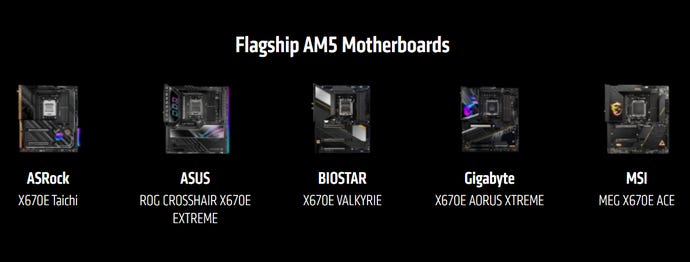
All chipsets will support overclocking, as per Ryzen tradition, though the X670E and X670 chipsets will have more advanced features and controls for this purpose.
The chipsets also vary in the degree of PCIe 5.0 support they can enable. X670E and B650E motherboards will support PCIe 5.0 connectivity for graphics cards as well as storage, whereas X670 and B650 boards will support PCIe 5.0 storage only.
