HomeNewsHalf-Life
Valve’s anniversary doc reunites the original team
Image credit:Valve Software
Image credit:Valve Software
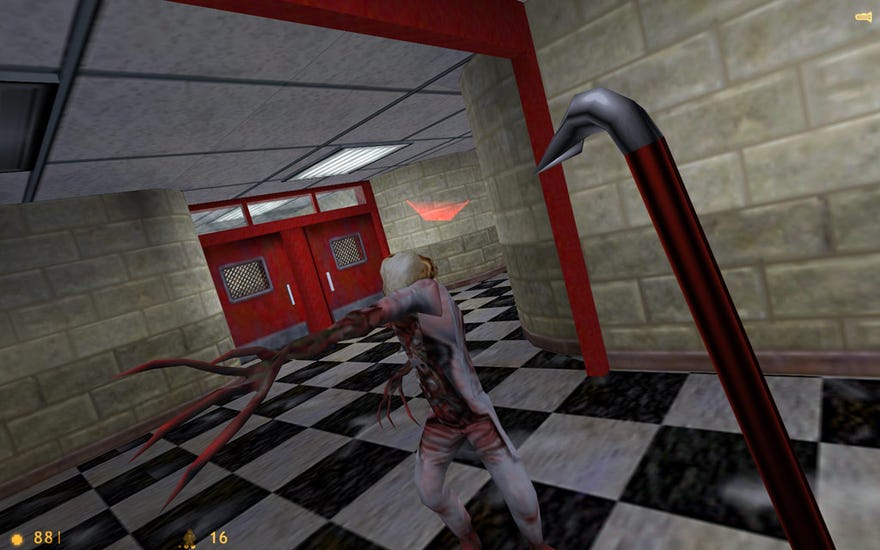
Half-Lifeturns 25 years old tomorrow, withnew maps and updates to celebrate. Valve also reunited the game’s original developers for an hour-long making-of documentary in which its original programmers and artists reminisce about creating the first-person classic at a time when many of them had never shipped a game before.
Here’s the documentary, produced in partnership with Danny O’Dwyer’s Secret Tape:
Half-Life: 25th Anniversary DocumentaryHalf-Life: 25th Anniversary DocumentaryWatch on YouTube
Half-Life: 25th Anniversary Documentary

One thing the documentary makes clear is that Valve didn’t have a cohesive plan for what Half-Life should be - including where its levels should take place. Different people on the team initially worked independently, and later started-over to try to turn it into something cohesive. As a result, Laur as texture artist had a lot of influence over whatBlack Mesabecame.
“I grew up just out D.C., and so there’s all these big, really banal office buildings, and that’s kind of the direction I went,” says Laur. “It started becoming a facility. So I started making these linoleum tiles, the drop ceiling, the concrete block wall, the black and white tile floor.”
“It’s just an overwhelming amount of work”, says Marc Laidlaw, Half-Life’s writer, of Laur’s solo efforts.
“Originally I was hand-painting all of the textures, and you can really see a shift in some of them where they go from hand-painted to photo reference,” says Laur. “The photo references are much much better. So I was all over Seattle - Harbor Island, Gasworks park - getting rusty metal things. What can I get good pictures of that is vaguely industrial and interesting to look at and then how can we use this?”
I also think the textures deserve a lot of credit for the mapping and modding scene that grew around Half-Life in the years after its release. Using the textures forQuakeor its sequel, all you could ever really create was more Quake. Half-Life’s real world textures were malleable enough that you could apply them a little differently, maybe add just a few of your own, and suddenly have a setting entirely separate from Black Mesa. That’s how you get from Half-Life’s singleplayer levels to early Counter-Strike maps like Assault, Siege, and Prodigy, all of which relied on Half-Life’s textures.
The snowglobe tumbles from my hand and with my last breath I whisper… “C3A1 underscore W5D.” |Image credit:Valve Software

Aside from discussing her work as a texture artist, Laur does also touch on another subject near the end of the documentary. “I was employee seventeen. There was a woman that was kind of the office manager, and eventually Lisa Guthrie came in at the desk. I was the only woman on the team,” says Laur, before sighing. “That was not awesome.”
Unfortunately Laur doesn’t get a chance to elaborate, but the documentary is worth watching throughout. I have hoovered-up dozens, probably hundreds of interviews about the making of Half-Life over the years, as well as listening to developer commentary and reading Raising The Bar and so on. I was therefore already familiar with much of the story the documentary has to tell, but it was still nice to see its developers reminisce all these years later.
